

Without a Doubt: The Best Material for a Tie
The best ties are made with the best materials. And you deserve the best. End your search for the best material for a tie. Refine your style and look your best (in only the best).
Image Credit: Aklasu Dark Blue Floral Grenadine Tie
 Jericho Bundac
Confidence and effortless elegance exude from a man in a tie. It adds polish and refinement to your suit, as long as you have the right tie. Pattern matters, but the material is the deciding factor. So what is the best material for a tie?
Quick Answer: What is the best material for a tie
Silk is the best material for a tie because it drapes cleanly, holds its shape, resists wrinkles, and lasts for decades when cared for properly.
If you are shopping with a specific occasion in mind, use the quick guide and comparison table below to choose the right fabric in seconds.
We will keep this practical. First, the reasons silk dominates. Then, the fabrics you will see most often, when they make sense, and when they do not.
Why silk is the best material for a tie

- Drape that sits cleanly against the shirt and jacket
- Shape retention so the knot stays structured and the tie resists wrinkling
- Durability that can last decades when stored and handled properly
- Depth and visual richness that synthetics struggle to match
Silk ties have the durability to last decades, as long as you care for them properly. Silk has a refined appearance despite its high tensile strength. It retains its shape well, which helps it resist wrinkles. Most importantly, silk drapes properly, which is the foundation of a sharp tie.
Most ties you see with varying patterns and designs are made of printed silk. You will also see ancient madder silk which produces rich colours and a distinct dry texture. Jacquard silk ties add dimension because the design is woven into the silk. Satin silk ties are a bold choice for evening events.
You will also find wool and silk blends like our Intro Navy and Steel Blue Block Striped Grenadine Tie.

How to choose a tie material quickly
- Daily office and versatility Choose silk, and consider grenadine for texture without loud pattern
- Interviews Choose silk and go with a grenadine in navy, charcoal, or deep burgundy
- Weddings Choose silk for clean formality, a grenadine tie if you want subtle texture that photographs well
- Summer Cotton and linen can work for casual tailoring, but wrinkles and construction matter
- Winter Wool works with heavier suits, but it is not a universal office tie
Tie materials comparison
|
Material |
Best for |
Strengths |
Trade offs |
|
Silk |
Work, weddings, formal events |
Drape, shape retention, longevity, depth |
Higher cost than synthetics |
|
Wool |
Autumn and winter, textured suiting |
Warmth, texture, character |
Less formal, less versatile for business settings |
|
Cotton |
Casual tailoring, warm weather |
Matte finish, relaxed feel |
Wrinkles easily, construction matters |
|
Linen |
Summer, casual suiting |
Breathable, seasonal look |
Wrinkles easily, often looks too casual for office formality |
|
Polyester |
Budget option |
Low cost, easy care |
Less depth and richness, shorter lifespan than natural fibres |
Shantung silk and other silk variations

If you want an irregular but subtle texture, consider shantung silk. Its distinctive ridges, known as slubs, create a quietly textured surface that keeps the tie interesting without relying on loud pattern.
Take a closer look at Aklasu's Navy Blue and Burgundy Block Striped Shantung Tie if you want a silk tie that stands apart while still pairing easily.
The best of the best: Grenadine Silk Tie
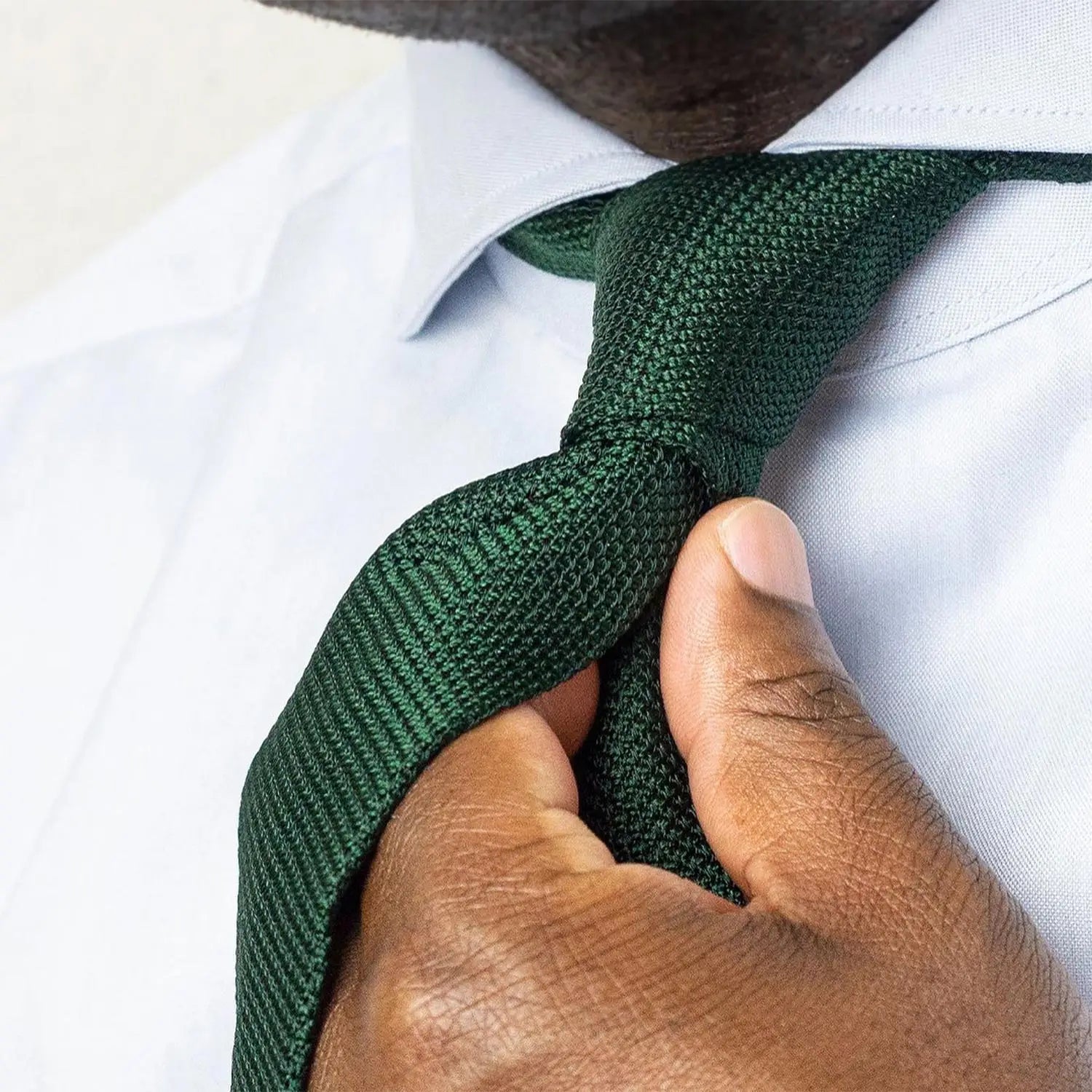
A grenadine silk tie earns its reputation through versatility. It is sharp enough for a boardroom, refined enough for an evening event, and approachable enough for a wedding reception. The texture carries the visual interest while the colour stays understated, which makes it easy to pair.
Grenadine ties are often produced in solid and subdued colours, which draws attention to the weave rather than the pattern. That subtle texture pairs well with a range of suit colours and shirt patterns.
There are two main types of grenadine: garza grossa and garza fina. Garza grossa has a looser weave, while garza fina has a finer and more compact weave.

In addition to versatility and texture, there is prestige to owning a grenadine silk tie. Only a small number of mills still produce grenadine on traditional looms. Artisans in Como, Italy, produce the beautiful three-dimensional weave that makes grenadine a modern classic.
If you want a dependable foundation, start with a navy or black grenadine. If you want a more relaxed texture that still looks refined, consider garza grossa.
Set yourself up for life with the Essential Grenadine Tie Collection

When other tie materials make sense
Silk is the best all around choice, but other fabrics can work when the setting calls for it. The key is understanding what you trade away when you leave silk.
Polyester ties
Polyester is common in entry-level ties. It is less expensive but lacks the depth and richness of silk. It often does not age as well, and it can look flat under light.
Cotton and linen ties
Cotton and linen are popular in warmer months and casual tailoring. They wrinkle easily, so construction matters. Check that they are appropriately lined, and accept that they will read more relaxed than silk.
Wool ties
Wool adds texture and depth to autumn and winter outfits, especially with flannel and tweed. The trade off is versatility. A wool tie can feel very heavy and substantial.
If you want bold texture without losing silk drape and longevity, consider a grenadine in garza grossa. The weave has character while the silk stays refined.
Consider a Midnight Blue Grossa Grenadine Tie if you want a textured tie that still works across settings.

FAQ about tie materials
What is the best material for a tie
Silk is the best material for a tie because it drapes cleanly, holds its shape, resists wrinkles, and lasts for decades when cared for properly. For the best of the best, grenadine silk adds refined texture and broad versatility.
Is silk always the best material for a tie
For most men, yes. Silk offers the best balance of drape, shape retention, longevity, and visual richness. Other materials can work for specific seasons or casual outfits, but they rarely replace silk as an all around choice.
Is grenadine silk better than regular silk
Grenadine is a type of weave. When made from silk, grenadine ties are often easier to wear across formal and semi formal settings because the surface has interest even in a solid colour.
What is the best tie material for an interview
Choose silk or grenadine silk in a conservative colour like navy, charcoal, or deep burgundy. The goal is polish, restraint, and a knot that holds its shape.
What is the best tie material for a wedding
Silk is the safest choice for formal weddings. Grenadine silk is a strong option when you want subtle texture that still reads refined in photos.
Are polyester ties a good option
Polyester ties are typically more affordable, but they often lack the depth, drape, and longevity of silk. If you wear ties regularly, silk is usually the better long term investment.
What tie material is best for summer
Cotton and linen can work for casual warm weather tailoring, but they wrinkle easily and often read less formal. For versatility across summer events, a lighter silk or grenadine silk remains the safest choice.
The best materials make you look your best.


